Blog 15: Summary of health care accessibility in relation to diseases and stem cell surgery .

People in the poor or colored communities face major problems because of their ethnic background, race, class, and economic status. Due to these factors many of these people in these area face serious medical problems that affect their health. In the long run, some are not able to visit their doctors to get regular checkups or help with their medical status because of financial difficulties. In other areas, they may be able to get medical advice but may not have enough fund if the solution requires x-rays, computerized tomography (CT) scan, positron emission tomography (PET) scan, or magnetic resonance imaging (MRI) If medication does not work, then surgery is usually the last resort. For example, a person who has stage 0 cancer, which is the “inner lining layer of the stomach”, this can be removed with surgery and necessarily need chemotherapy or radiation therapy. (American Cancer Society). In other cases, such as stage II, surgery and chemotherapy are needed (American Cancer Society). As the stages of cancer continue to grow more attention is needed and medical insurance may not be available, In other cases, people may not have the resources to pay for surgery, chemotherapy, radiation therapy, or all three. Access to Health Care, obesity, and mental health are some major problems these communities face. However, regulating health care for poor communities through the government and holding the government responsible for stem cell research through the access of health care can help these people in their communities. Since the 1900s, stem cell research has caused controversy; however, this process has helped elevate many people from their incurable disease and live a long healthy life. In order for this to happen the federal government must take action in allowing stem cell research to expand such as Johns Hopkins stem cell research programs and continue but also grant health care throughout the poor or colored communities to access this. This expansion can help elevate these communities and stop turning them away because of financial problems they have.


Sources:

“Treatment Choices by Type and Stage of Stomach Cancer.” American Cancer Society, http://www.cancer.org/cancer/stomach-cancer/treating/by-stage.html.

Image result for american cancer society

Blog 14: Reflection on Ted talk: A recipe for health equity in the 21 century : Renaisa Anthony

Guest speaker Renaisa Anthony speaks up about how to work on health equity in present-day Detroit and worldwide. The speaker is a public health practitioner and medical doctor in training. People she went to school with had HIV and aids. She noticed that people she knew also were pregnant with two kids and were struggling to feed their children. When she would go back home she would notice the price of fresh produce was not only hard to find but very expensive. This statement was something very commonly discussed this semester, health disparities in underprivileged communities. The shocking truth that various people are not denying health products because they dislike it, but can be due to the fact that it’s scarce and expensive. Learned in medical school that African Americans and Latinos are more susceptible to diabetes, high blood pressure, and many more diseases that can drastically affect the life expectancy of a person. Which is common information that is used to project what age we are expected to live up to based on cultural values and sex.
The values that are social determinants of health based on the speaker is race/ethnicity, culture (norms and currency), education, socioeconomic status/ income, neighborhoods, and occupation. These social determinants of health are reviewed and re-enforced but are listed in different hierarchical values for different people based on importance. For some race and ethnicity is the most important, in which my opinion I believe it is because race and ethnicity are commonly used to discriminate and project a person’s life expectancy. The solution suggested by the speaker or recipe for health equity is research, education, collaboration, initiative, public health/ policy, and empathy to empower. In order to empower change, the speaker suggests momentum. As defined by her she states momentum is moments… monumental moments that move you forward.


Journal 13 (12/05/2018): Guest speaker from a city government position. What is city government? Why is it important?


The group speaker Nadia is involved in project management in city government.  City government is a form of local government in the United States.  The speaker informed the class on the importance of city government as well as, how stressful, and rewarding it can be.  Some of the responsibilities of city government are to oversee important functions such as the planning and financing of roads, running of public schools, organize police and other emergency services, provide water, establish zoning regulations, and create elections for citizens within the city. This came to a surprise to me, the various projects that city government foresee. The speaker spoke out on the hardships that come with her profession. She claimed that the biggest hurdle to overcome is communication. Due to the ongoing issues and the shortage of time to interact between agencies, she assisted in an initiative to easily provide communication and signatures between different agencies. In turn, it has allowed for a more efficient communication method between different sectors of city government in order to efficiently resolve tasks. One point that she reiterated was how rewarding the profession was. In one shape or form, she insisted on how the work she was doing was fulfilling because of the difference she was making within her department. Although, at one point she stated that she had a change of heart and was looking for a career change. Yet despite the intentions at the time she has stayed and grown within her profession. One important take away she had advised the class was to not be afraid to speak up and reach out to others for help. She stated that her position as project management is a product of networking with others. She gave credit to the career & professional development institute (CPDI) department in City College (CCNY). She emphasized the importance CPDI was to her during undergraduate and post-graduation.

sign pen business document
Photo by Pixabay on Pexels.com

Journal 12 (11/21/2018): Reflection on (PAR project) presentation guest speaker Alexis Harrison.

Guest speaker Alexis Harrison gave a lecture on the work conducted for the PAR (participatory action research) 1 and 2 projects. The speaker provided evidence on the data collected and various methods of research used to collect the data. One interesting point mentioned in the presentation was that the CCB (community care Brooklyn) has the intentions to reduce hospitalizations by about 25% by 2020. In order to contribute with the 5-year goal, the PAR project contributed to community engagement in order to promote change. With the help of the local high school students as well as staff, surveys and interviews were conducted. One challenge mentioned by the speaker was in maintaining the volunteers motivated and engaged. The surveys conducted were 100 questions and took about 15 minutes to complete. The most common place to collect surveys were in community and food events it was most difficult in shopping malls and outside of supermarkets.

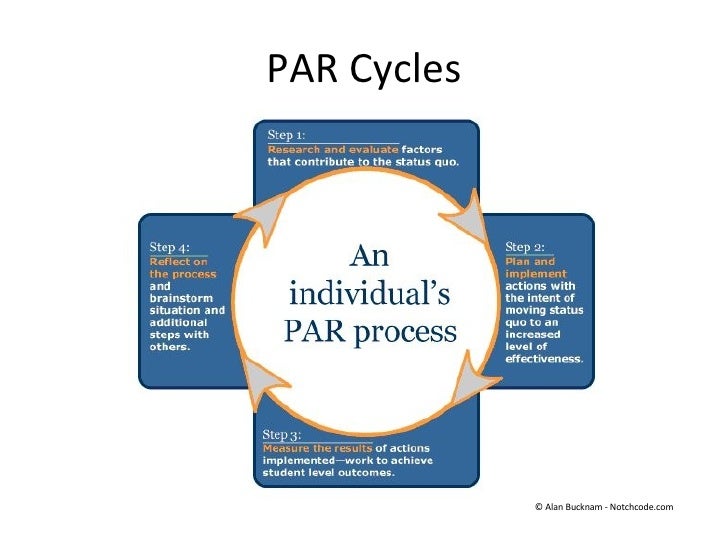
The challenges mentioned were to aid future participatory action research projects that the partners for change fellows are working on. Alexis Harrison provided feedback on how to properly mold a research project and provide accurate data that supports or answers the main topic. The speaker mentioned that in order to promote change an intuition is targeted. The data collected such as surveys and interviews as well as, evidence from previous studies are then used to pitch to an institution in order to address a problem and promote change. The first step in conducting a PAR would be addressing a problem to focus on. The main topic or big question would then be answered by sub-questions which would be backed up by collected data. Some research limitations might be the IRB (institutional revenue board), certain expectations had to be met as mentioned by Alexis Harrison. Agreements do not provide misleading information and survey anybody below 18 years of age were just a few mentioned.


Image result for participatory action research


Image result for participatory action research


Journal 11: 11/14/2018 (Reflection on PAR project conducted in Brooklyn NYC)

PAR better known as Participatory action program in Brooklyn addressed a main focus is mobilize the Brownsville and East NY communities to address inequalities that affect health. As part of the PAR 1 (vital Brooklyn) the research conducted were surveys and interviews. Approximately 525 residents were surveyed and 23 people were interviewed. The results collected was astonishing! Less than half of the respondents reported to be in “very good” or “excellent” health. In addition, over half of the residents claimed that there was a lack of healthy food options within the area. As far the community goes, there were claims that the social challenge within the community was sexual harassment and violence. Base on the claims it seems very unrealistic for people to be in good health if they lack health options and are subjected to random acts of violence within their community. As a result of the findings the CCB (Community Care Brooklyn) prioritized food justice and aided in the improvement of other social determinants of health that were addressed.

Due to the success of PAR 1 another research initiative was started targeting Bedford Stuyvesant, Crown Heights, and East Flatbush. PAR 2 choose the study areas due to high rates of mortality, chronic disease, and economic challenges. The main concern in participatory research is convincing people to participate. Yet the people chosen to participate in PAR 2 were dedicated residents within the mentioned areas of Brooklyn that are eager to change their environment so that residents can have better opportunities. The research conducted on median household incomes is astonishing, based on the study out of Bedford Stuyvesant, Crown Heights, and East Flatbush, Bedford Stuyvesant had the lowest median household income at $24,424 with a 32% of people living below poverty within that sector. Low income households can take a toll on mental health, physical health, bad diets, and a surge in hospitalizations due to poor conditions.

Image result for participatory action research


Image result for Brooklyn


Journal 10 (10/31/2018): Summary of Dr. Josy Hahn’s lecture on racial equity…

Guest speaker Dr. Josy Hahn gave an informative lecture on racial equity and social determinants of health. Dr. Hahn engaged in a group discussion on what were examples of equality and equity. The image of equality showed very little community resources and engagement for local communities. Furthermore, the image of equity showed various outputs for community engagement certain examples were access to hospitals and basic commodities. The main points used to identify the root problems of inequities in communities are policies that have created unbalanced power and privilege, Historical practices of exclusion and geographic concentration. Another important aspect of the presentation was the social determinants of health and how they vary by place and race. Social determinants of health differ in terms of places with higher or lower community engagement. In communities with greater resources a social determinant of health might be education as for in a community with low resources might have issues from an economic stand point.


One shocking fact mentioned in the meeting was the segregation that takes place in New York City. Based on the provided map of NYC the areas with a high poverty rate is also an area where a large population of people of color reside. The figure sums up one of the many root causes of inequities for which in this case would be exclusion and discrimination. Another key demographic would be the percentage of children under 18 who are in poverty. There was a higher percentage of black non Latinx, Latinx and Native American who suffered from poverty in comparison to white non- Latinx and Asian. In addition, the same groups had high poverty levels also had high incarcerations for males. The data collected sums up the many issues that are occurring within communities yet the same 3 races show higher numbers. Thus, raises the question on how to reduce these number so that we do not continue to fall under these social categories

.

P4C Journal 9 (10/17/2018): Reflection on Sridhar Venkatapuram TEDx Talk…

The TED talk discusses the breakdown of what health justice is and ways people may view certain diseases or conditions. One point discussed was the average deaths of children are approximately 7 million every year. The deaths of these children are caused by unbalanced diets, not having access to medications, etc. The immediate response to many as stated in the video is that many assume that the reason why these children are passing away is due to the lack of supplies. Many organizations, as well as the public state supplies, would fix the ongoing issues related to the death of a group of people in an area. Yet other factors are needed to fix health disparities in underprivileged locations. In order to create health justice solutions certain factors, greater than donations and items are needed to make a change. The way people interpret health justice is the first priority. Instead of viewing health or health care as an item or a service instead it should be viewed as a method of freedom. The video states that if health is viewed as a form of freedom than many more people would not be without it. Due to the simple fact that many people throughout history fight and have succeeded to be free thus, it would be a central issue when people change their view on what health justice is.


Another point mentioned in the video is that various races are subjected to having certain medical conditions. As for people located in North Omaha have a high rate of diabetes. Many people are subjected as a product of their own bad decisions such as unhealthy diets. Although people don’t view their health as an issue within the environment. In certain locations, people don’t have access to parks, bicycles, recreational centers, food, healthy food, and education. Once these people have the opportunity to have all that are restricting their freedom and are still making bad decisions then one can make the claim that the person with diabetes is caused by a series of bad decisions. One clear point that was made was how people perceive health and how we can change the way we think of certain communities as well as common claims to certain races.

Reference:

P4C Journal 8 (10/24/2018) : Reflection on Soul fire farm video…

The program soul fire farm is a donation based program that supplies underprivileged communities with healthy food options. Locally grown food is delivered to communities allowing for certain people to be one step closer to food equity. Based on the provided information of the video there are approximately 3 times more likely people to die from poor diets then from violence related encounters. In addition, learning disabilities could be caused as a result of a poor diet. Thus, bad eating habits result in negative outcomes. Maintaining a tight community allows for food inequalities to become deceased. Equal food opportunities are not the only subject on the agenda, education plays an important role in making healthy decisions as well as informing children on what an average diet might entail.


The soul fire farm allows for volunteers to engage in change within a community allowing people to have access to better diets and making a difference to change a community. The program does a great job in uniting communities on difficult topics such as food inequity and racial injustices. Teaching younger generation’s good habits in sustainable farming creates productive young individuals with insight on how a community should have access to healthy options that are not fast food. Food inequity can be linked to racism within a sector. Based on the statistics provided by the organization approximately 1/10 hungry families are Black and Latino. This came to a surprise to me that food can be used as a tactic to create racial barriers within underprivileged communities. The program allows people to learn about injustices as well as act upon it to make change happen. Soul fire farm is surprisingly not funded by any major organization. From 2011 through 2017 the number of participants has increased significantly thus, the program is flourishing and teaching participants healthy food options, activism training, as well as farming training. All in all the organization is tackling multiple initiatives that prevent communities to be racially targeted and have sustainable healthy foods.

P4C Journal 7 (10/10/2018): Bridging the gap to health disparities…

The article creating integrated strategies for increasing access to healthy affordable food in urban communities discusses the effects of introducing healthier food options for children in preschool programs. The Idea was projected to be a five-year program that would ultimately improve the living conditions for underprivileged communities. The educational approach to for young children would allow for them to reflect on the older generation they live with. In addition, teaching good eating habits to young children molds a new generation that grows up knowledgeable in healthy food options and where they could be found. Ultimately this educational approach would hopefully cause a domino effect that would create food hubs, improvement of food quality, as well as create jobs for people in the food sector. Ultimately, these changes would improve the conditions of an underprivileged community. The food education program alongside the food hub allows young kids to learn good eating habits as well as, apply what they learn by having healthy options accessible at an affordable price.

A key strategy to improve food inequalities within a community would be introducing new job opportunities within the community. A workshop on how to apply to certain positions such as SNAP (supplemental nutrition assistance program) and to become food handlers not only educates employers of healthy decisions but allows for them to get a source of income as well. All the strategies mentioned in the reading are interconnected to ultimately drive down the cost of healthy foods, improve supermarkets while educating the community on what a balanced diet consists of. The program has made a large improvement starting from only 10 sites with only 700 children to impacting about 30 sites with 1500 children. The increase in the number of children in the program benefits the final goal at hand.

References:

https://www.ncbi.nlm.nih.gov/pubmed/28664510

http://restorationplaza.org/center_healthy_neighborhoods/

P4C Journal 6 (10/03/18): The food environment of the upper west side…


The food environment in the community of my internship on the upper west side consists of a food desert full of many unhealthy decisions. The only healthy options available is a whole foods located a block away from the site. The community holds multiple fast food chains such as McDonald’s, Dunking donuts, and pizza shops. Based on patient demographics, a large portion of patients seen at Ryan health center are diabetic and or pre-diabetic. The clinic is based on a community care initiative, for which foresees the care of multiple patients in the area. The group of diabetic patients that are treated at the site are also seen by a nutritionist if necessary, which would bridge the gap to patients that need education on healthy eating options.

On the other hand the obesity and diabetes percentages in the community are relatively low based on the community health profiles of 2015. District 7 is considered to have a 4% of adults to be diagnosed with diabetes. As a whole 7% of adults were diagnosed with diabetes in Manhattan thus, the 4% that makes up the district is considerably low. On the other hand, the leading cause of death in the district is heart disease which takes about 2,146 lives for every 100,000 of the population. Although some of the numbers don’t correlate with the amount of patients seen at the clinic, about 89% of the upper west side claims to be in excellent or very good health in comparison to the upper east side that has 92% of people who claim to be in good health. Ultimately I believe that the data collected on the district might be slightly outdated considering that the community is constantly undergoing change. Change that involves new food spots, as well as neighborhood conditions, and health care.

References:

https://www1.nyc.gov/site/doh/data/data-publications/profiles.page

Website Built with WordPress.com.

Up ↑

Design a site like this with WordPress.com
Get started